Nail Health & Dermatology
Why Do Fingernails Curve Down? A Dermatologist-Reviewed Guide to Causes, Fixes & Red Flags
Noticed your nails hooking over your fingertips? Here’s how to tell if it’s totally normal or worth a doctor’s visit — plus simple fixes that actually work.
Reviewed by Dr. Sarah Mitchell, MD, Board-Certified Dermatologist
Last updated June 2026 · 8 min read

The Short Answer
Most downward nail curving is completely harmless — caused by genetics, dehydration, or simply letting nails grow past the fingertip. True “nail clubbing” (a medical sign) looks very different and is rare. Keep reading to see exactly how to tell the difference.
1. Common Harmless Causes of Downward-Curving Nails
Before you spiral into WebMD territory, here are the most frequent (and completely benign) reasons your nails curve downward:
- 1.Genetics — The natural shape of your nail bed is inherited. If your parents have nails that hook slightly at longer lengths, you likely will too.
- 2.Dehydration & dryness — Nails that lack moisture become brittle and curl inward, especially during winter or with frequent hand-washing.
- 3.Length — Nails naturally curve more as they grow past the fingertip because they lose structural support from the nail bed underneath.
- 4.Ageing — Nail growth slows with age, and the nail plate thickens unevenly, which can cause increased curvature over time.
- 5.Nutrient gaps — Low iron (anaemia), biotin, or zinc can affect nail strength and shape, making them more prone to curling.
2. Normal Nail Curving vs. Nail Clubbing: How to Tell the Difference
This is the part that causes the most anxiety — and rightfully so, because the internet often conflates two very different things. Here’s a clear breakdown:

✅ Normal Curving
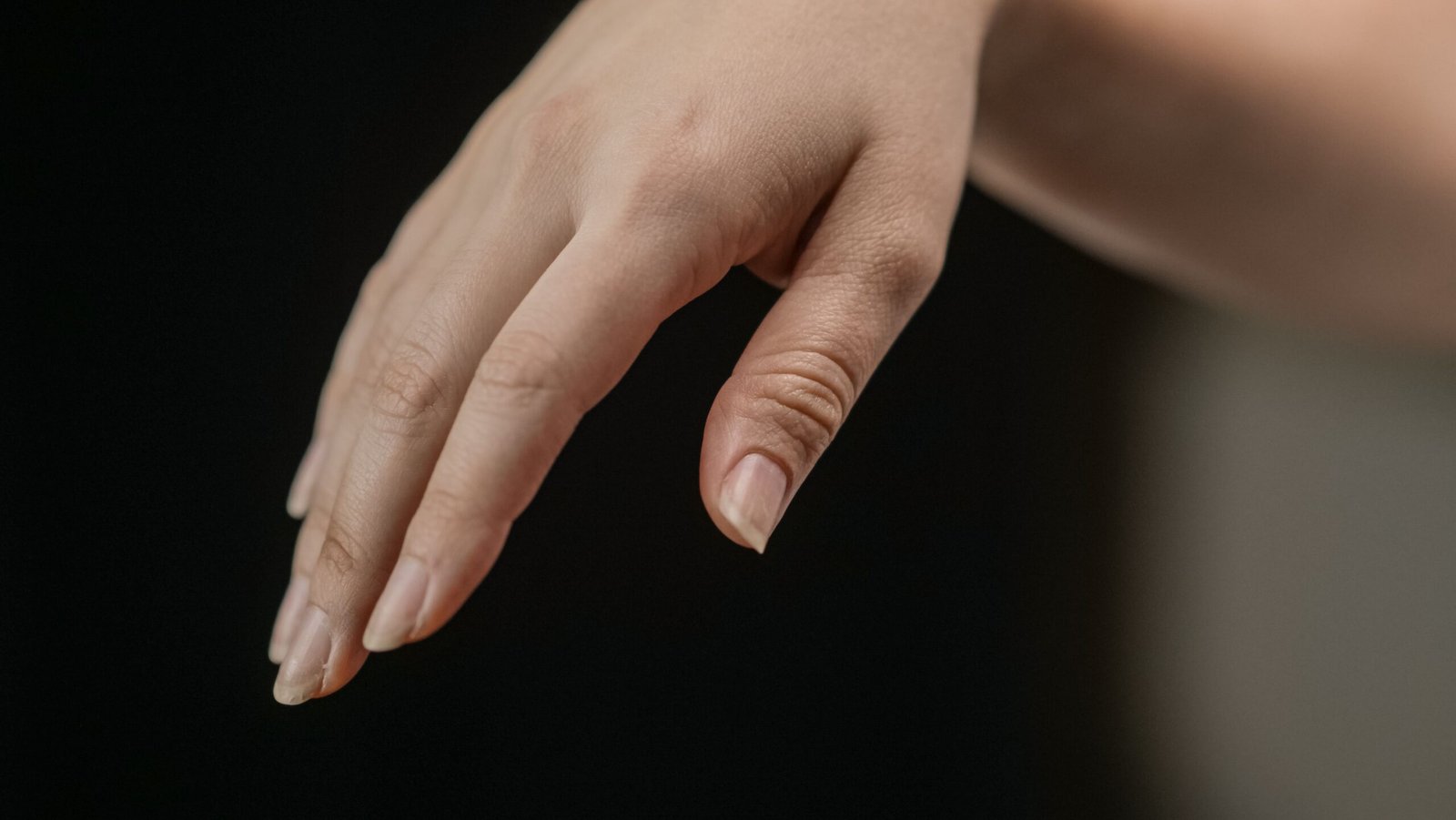
Nail curves gently at the tip when grown out. Nail bed angle is less than 160°. The nail feels firm. No swelling around the cuticle. You can see a small diamond-shaped gap when pressing two nails together (Schamroth’s window test).
🚨 Nail Clubbing (Medical)
Fingertips appear swollen and bulbous. Nail bed angle exceeds 180° (nail wraps around the fingertip). Nails feel spongy when pressed near the cuticle. No diamond gap in the Schamroth window test. Often affects ALL fingers simultaneously.
💡 Try the Schamroth Window Test: Press your two index fingernails together back-to-back. If you see a tiny diamond-shaped gap of light between the nail beds, your nails are normal. If the gap disappears completely, mention it to your GP.
3. When to See a Doctor
Schedule an appointment with your GP or dermatologist if you notice any of these alongside the curving:
- Swollen, puffy fingertips that appeared over weeks or months
- Shortness of breath, persistent cough, or unexplained fatigue
- The curving appeared suddenly on all nails (not gradually with growth)
- Nail discolouration (blue, very pale, or dark streaks) alongside the curving
Important context: True nail clubbing associated with serious disease is quite rare and almost always comes with other noticeable symptoms. If your only concern is that your nails curve when they get long, it’s overwhelmingly likely to be a normal cosmetic issue.
4. How to Fix or Manage Downward-Curving Nails
5. Frequently Asked Questions
Can a vitamin deficiency cause nails to curve down?
Yes — iron deficiency (anaemia) can cause spoon-shaped or downward-curving nails. Low biotin and zinc also weaken nail structure. A simple blood test can rule this out.
Do curved nails always mean lung disease?
Absolutely not. The vast majority of downward-curving nails are genetic or due to dryness. Nail clubbing linked to lung or heart disease is rare and presents with swollen fingertips and other systemic symptoms.
What type of doctor should I see for nail concerns?
Start with your GP, who can perform the Schamroth test and order blood work. If needed, they’ll refer you to a dermatologist who specialises in nail disorders.
Will keeping my nails short stop the curving?
In most cases, yes. Nails curve more as they extend past the finger because they lose support from the nail bed. Keeping them trimmed to just past the fingertip significantly reduces visible curving.